Art and Design
"Every human is an artist. The dream of your life is to make beautiful art." Don Miguel Ruiz
This area of our curriculum is led by Miss Leetham. Her role is to provide the professional leadership and management for Art and Design to secure high-quality teaching, effective use of resources and improved standards of learning and achievement for all pupils. Miss Leetham has been leading this area of the curriculum since September 2019. She says:
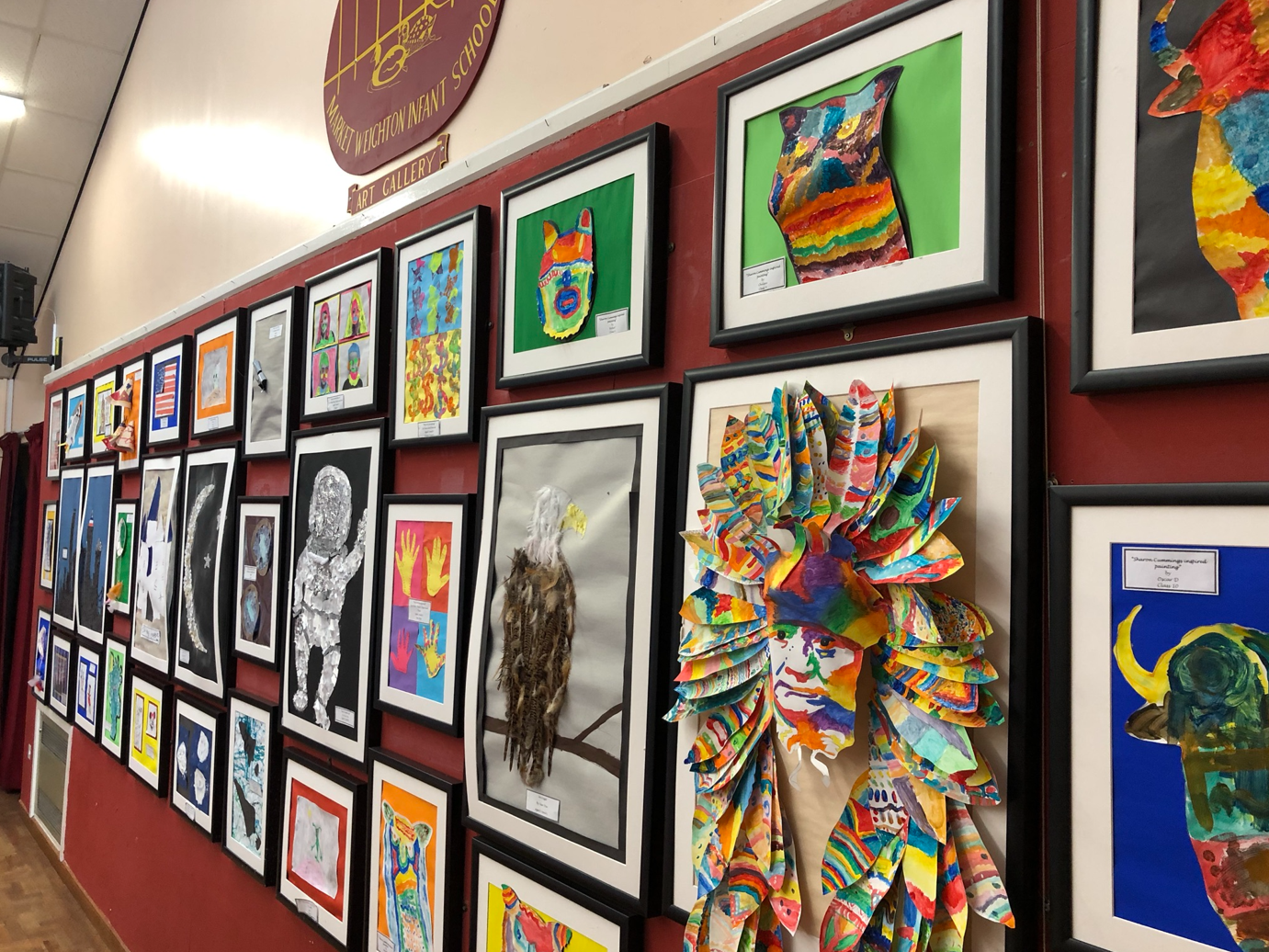
“When you step inside Market Weighton Infant School our passion for art and design is striking. Our school building is a celebration of artistic creativity that begins in the foyer, continues through the hall, corridors, and into the classrooms themselves. Our classrooms have feature walls which make them inviting spaces in which to inspire, to learn, and to create. We are incredibly proud of our school art gallery and believe it showcases the depth of study and progression at Market Weighton Infant School.
Our art and design curriculum genuinely excites our pupils’ imagination. Their motivation is high and the quality of work they produce is good.
Art requires children to be able to use their fine motor skills, so our EYFS team focus heavily on developing pupils' gross-motor skills with activities such as dough discos. It is important that pupils can talk about their creations and those of other artists so our EYFS team work on developing early speech and language skills through the use of tailored programmes. In the EYFS pupil's artwork is largely focused on themselves, their interests and how they view the world through the changing seasons. We home in on painting, drawing and sculpting and have stations set up in our free-flow unit. Teachers make sure that pupils are taught to use a range of small tools, including scissors, paintbrushes and a variety of mark-making tools e.g. pencils, chalk, pastels and playdough tools. Our younger pupils are included in whole-school celebrations such as our ‘Arts Week’. Both Nursery and Foundation Stage 2 pupils also contribute art pieces that build up our school art gallery in the hall.
Our older pupils are taught through five artistic skills, with each skill given dedicated time throughout the academic year. How children apply these skills is given greater focus as the pupils move through Key Stage 1."
The key elements of the National Curriculum's programme of study for art have been organised into a set of hierarchical statements to ensure that children accumulate more and more artistic knowledge as they progress from our Nursery or Reception through to the end of Year 2. Teachers are aware that planning must always have an eye on longer-term learning and the part that artistic knowledge building plays in this.

|
Progression in ART | [pdf 222KB] |

|
|
|
National Curriculum - Art and design key stages 1 to 2 | [pdf 86KB] |
|
All children contribute to our school art gallery showcasing work from Nursery to Year 2.
Intent: what do we want children to know about art and design by the time they leave our school?
We believe that helping children to take their first steps into the world of art and design can help our pupils to achieve two of our school’s aims:
- To challenge children so that they not only develop their potential, but achieve the unexpected so that they amaze themselves, and us!
- To offer active, independent learning experiences.
How does art contribute to this? To us, art is a reflection of an individual. Staff are aware that art is not just about learning to paint. They know that children’s creativity is hindered by being asked to paint a picture in the same way their teacher has. For our youngest children, teachers scaffold learning through a supportive process. They may demonstrate an artistic skill and then challenge pupils to explore for themselves to reach the desired learning outcome. For example, in Year One, children watched their teacher do an input on colour mixing. She painted a raincloud, half yellow and half red, mixed the colours and created orange rain. When pupils were allowed to explore colour mixing the teacher watched as one pupil painted a welly; half blue and half yellow. The pupil then painted green footprints!
For our older children, art is still about individual creativity. However, pupils are given more specific outcomes. For example, in Year 2 children may be asked to weave a dreamcatcher. They will be taught the skill of interweaving the twine to create the correct shape of the dreamcatcher but will then be provided with a vast selection of embellishments to personalise their creation.
Aspiration: we want our children to aspire to be creative individuals. We want them to know that their individuality makes them special. Their ability to create a piece of art unlike anyone else’s is a special gift that could influence their chosen career.
Independence: we provide opportunities across all year groups for children to independently access art provision. For example, we teach pupils which painting equipment they need and show them how to clean up their tools. Once taught all pupils, can set up their tools, paints, and can tidy away without the support of an adult. We want them to know this is a skill that artists need to have.
Motivation: we provide pupils with the opportunity to learn five different artistic skills with the hope this motivates them to love art and all it allows you to create.
Aims of teaching Art and Design
- to use drawing, painting and sculpture to share their creative ideas and imaginative skills.
- to develop a child's sense of individuality and boost their self-esteem.
- to share their growing experiences of the world.
- to develop a wide range of art techniques through the use of repeated experiences. Research tells us this is how children learn best. Montessori says, “Repetition doesn't necessarily mean completing the same activity, over and over again. Instead, repetition refers to any form of work that provides the child with opportunities to practice a skill or knowledge area.”
- to learn about a range of artists who create art using different practices and disciplines. We aim to provide them with opportunities to replicate an artist’s work in their own image.
- to provide children with opportunities to share their views on their own and other artists artwork.
Links with British Values and PSHE (Personal, Social & Health Education)
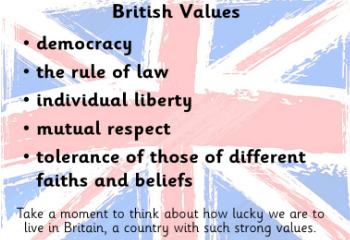
Our art curriculum offers an excellent context for developing many of the worthwhile skills and understanding that are intrinsic British values. It provides opportunities for our children to begin to understand:
- Democracy –
- Take into account the views of others in shared activities.
- The Rule of Law –
- Undertake safe practices, following class rules during projects and activities for the benefit of all.
- Understand the consequences if rules are not followed.
- Individual Liberty –
- Work within boundaries to make safe choices in art and design.
- Make own choices within art and design projects.
- Mutual Respect –
- To behave appropriately allowing all participants the opportunity to work effectively.
- Review each other’s work respectfully.
- Work together on projects, help and advise others.
- Experience different festivals, traditions, and celebrations through art and design.
- Tolerance of those of different faiths and beliefs –
- Experience and talk about art and design work from different cultures.
- Use art and design pieces to learn about different cultures around the world.
Our art curriculum offers an excellent context for developing many of the worthwhile skills of PSHE. It provides opportunities for our children to experience:
- Spiritual Education –
- Use imagination and creativity, to explore ideas and feelings in works of art and express themselves through their art and design activities.
- Develop fascination, awe and wonder in the work of others.
- Social Education –
- Collaborate to create pieces of work.
- Respect each other’s ideas and opinions when talking about pieces of art and design, including the work of others in the class.
- Recognise the need to consider the views of others.
- Develop collaborative, cooperative and teamwork skills.
- Cultural Education –
- Reflect how cultures are represented in art and design, understanding the ideas behind art, craft and design in different cultural contexts.
- Explore a range of festivals and celebrations from our own and other cultures.
Implementation: how is art being delivered?
We make sure that art sits securely within out topic-based approach to teaching the curriculum. In Foundation Stage and Year One we have art areas in our classrooms that allow children to independently explore their creativity. Across school, mini topics provide in-depth explorations into a range of artists' work and allow children to practise and re-visit key artistic skills.
Art is used as a stimulus for the teaching of other subjects. Children use their artistic understanding to inspire work that they do. By developing strong cross-curricular links, teachers can develop children's vocabulary even further.
Cross curricular art - making a leaf garland using evergreen and deciduous leaves


Choice of content
Activities in Nursery and Reception support pupil’s introduction to Art;
- Art requires children to be able to use their fine motor skills so in the Foundation Stage we focus heavily on developing gross motor skills through the use of dough disco’s/the gross motor alphabet.
- We want our pupils to talk about their own creations and those of other artists so in Reception we focus on developing early speech and language skills through tailored programmes.
- The art our pupils produce is largely focused on themselves, their interests, and how they view the world through the changing seasons.
- We have a big focus on painting, drawing and sculpting and have stations set up in our free-flow units.
- Our Foundation Stage teachers make sure that pupils are taught to use a range of small tools, including scissors, paintbrushes and a variety of mark-making tools e.g. pencils, chalk, pastels and playdough tools.
- Our younger children are also included in whole-school celebrations such as our ‘Arts Week’. They contribute art pieces that build up our school art gallery.
We follow the programmes of study in the National Curriculum (2013) which provides us with flexibility in the art and design techniques we teach. The curriculum recognises the need for exploration, imagination and originality.
Our KS1 art curriculum is shaped in the way it is for a variety of reasons. We carefully designed our programme of study to include experiences in: sculpting/modelling, collage, painting, printing and drawing.
Skills taught are progressive and ensure pupils learning moves rapidly:
- Our Year One children have a skills-based curriculum and produce art in both their indoor and outdoor environments.
- Our Year Two children drill down into a specific art skill and add finer detail to their work. Their artwork may take an extended period of time and they are given opportunities to experiment before creating their final piece.
- Our programme of study allows children to learn about the work of a range of artists and make links between the artist’s work and their own. We are passionate about inviting local artists into school to talk to our pupils and run workshops.
A Year 1 child created art outdoors and indoors by painting an autumn leaf-themed colour pallette.

Helping children to remember their learning and make links
- Retrieval practice is at the heart of each lesson and provides the opportunity to recall previously taught knowledge. Through enabling knowledge to stick, this allows children to build secure understanding.
- Activities that specifically emotionally and intellectually engage our children are planned and delivered for the learning to go deep. For example, our Year Two children study the work of different sand sculptor’s and then sculpt themselves on their trip to the seaside.
- Activities that are practical and enable children to apply their knowledge and understanding.
- Children are challenged to think and to care so that they can express their personal opinions about pieces of art.
For children who find learning more challenging, teachers use a whole range of strategies to help engage them in art. This is personalised according to the individual needs of the child.
Staff training
Wherever possible, our teachers are engaged in discussion of what constitutes high quality teaching and learning in art. These discussions are set within a practical context of real work children will be engaged in so that principles emerge from practice and can then be applied to other contexts. Time is provided for staff to work together on planning and curriculum development. The profile of art is kept high in the school through our detailed planning, resources, and art galleries that show the high quality of the children’s work.
Impact: how is art enriching the learning of our children?
Children in Key Stage 1 are well prepared to start learning art because of the how well our early years team develop their expressive arts and design and physical development.
Teachers have thought carefully about why pupils should study areas of art and what they will know and understand by the end of Key Stage 1. Teachers typically sequence activities appropriately and plan tasks that help pupils to build on what they already know. There are a wide range of interesting activities that allow pupils;
- to use drawing, painting and sculpture to share their creative ideas and imaginative skills.
- to develop a sense of individuality and boost their self-esteem.
- to share their growing experiences of the world.
- to develop a wide range of art techniques through the use of repeated experiences.
- to learn about a range of artists who create art using different practices and disciplines.
- opportunities to replicate an artist’s work in their own image.
- opportunities to share their views on their own and other artists artwork.
We want to inspire pupils to love art and understand that this could influence their chosen career. We value children’s work by giving it pride of place in our school art galleries. We hold regular career talks and workshops run by local artists, crafts people and designers. Our yearly school trips are also art inspired and support the work of local artists.
Teachers explain lesson content clearly. This helps pupils, and particularly disadvantaged pupils and pupils with special educational needs and/or disabilities (SEND), to improve their use of vocabulary and remember more over time. Teachers’ careful consideration of how to adapt activities ensures that pupils with special educational needs and/or disabilities (SEND) access fully the art curriculum. The cultural capital of disadvantaged pupils is enhanced by taking them on school visits to experience art. Children are enthused by the strong subject knowledge of teachers and the way they explain subject content in age-appropriate ways.
Teachers assess pupils’ understanding of key artistic concepts well. They check their knowledge of art through questioning pupils during lessons and through monitoring discussions, held once pupils have studied an artist.
Consequently, pupils are very keen to know more about art and are increasingly well prepared to develop their understanding in Key Stage 2. Pupils take their enthusiasm for art into their further studies at Mount Pleasant Junior School. This includes being taught about “great artists” – a practice we begin by studying artists such as Goldsworthy, Warhol and Van Gough.
Teachers appreciate being able to work together in teams to plan topics and activities. They feel a sense of responsibility to make sure that pupils get the best possible provision and, typically, have strong knowledge of the topics they teach.
