Design and Technology (DT)
“Good buildings come from good people, and all problems are solved by good design."
Stephen Gardiner
This area of our curriculum is led by Mrs Pocklington. Her role is to provide the professional leadership and management for design and technology to secure high-quality teaching, effective use of resources and improved standards of learning and achievement for all pupils. Mrs Pocklington has been leading this area of the curriculum since October 2018. She says:
“Our design and technology curriculum is exciting. It is both practical and inspiring and enables children to contribute to the innovation, culture, wealth and well-being of the nation. We deliver both strands of the design and technology curriculum: Designing and Making and Cooking and Nutrition. In Early Years, the focus is on making through exploring the world around them and the development of the gross and fine motor skills they need to successfully approach the Key Stage 1 curriculum. Continuous provision areas allow children to create their own open-ended products that support their imaginative play. They use a range of materials and are taught basic techniques such as joining, folding and safe use of simple tools. Challenges are included to ensure key skills are applied. Our older children in Year 1 and Year 2 follow the National Curriculum. They begin to develop the creative, technical and practical expertise needed to design and make products for a wide range of users. They develop skills to critique, evaluate and test a variety of products. Children use their knowledge of good nutrition to prepare healthy dishes. Children’s enthusiasm and motivation in design and technology is high."
The key elements of the National Curriculum's programme of study for design and technology have been organised into a set of hierarchical statements to ensure that children accumulate more and more knowledge as they progress from our Nursery or Reception through to the end of Year 2. Teachers are aware that planning must always have an eye on longer-term learning and the part that knowledge building plays in this.

|
Progression in design and technology | [pdf 186KB] |

|
|
|
National Curriculum - Design and technology key stages 1 to 2 | [pdf 109KB] |
|
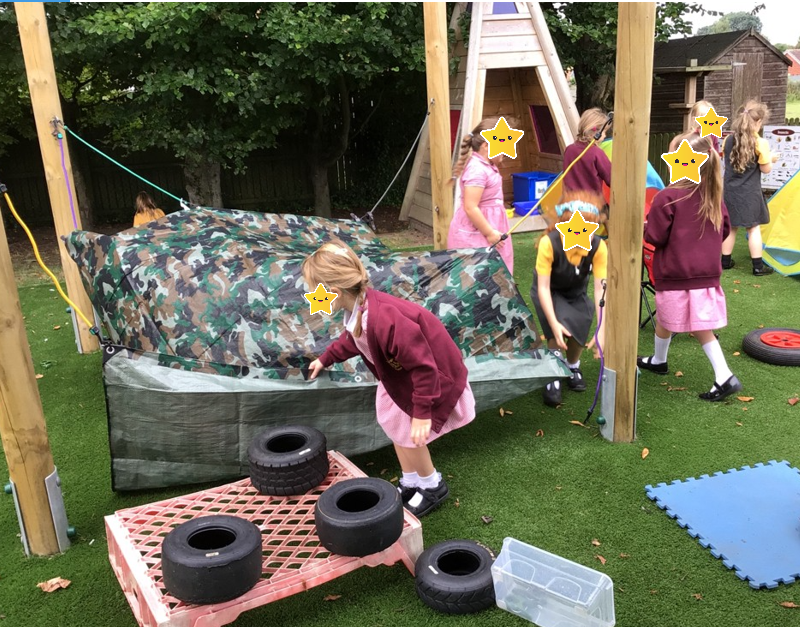
Y1 children working together to construct a den.
Intent: what do we want children to know about design and technology by the time they leave our school?
Aims of teaching design and technology
We believe that all children should have access to a high-quality design and technology curriculum. Design and technology draws on disciplines such as maths, science, engineering, computing and art. Lessons put all these subjects into context making them easier to digest and more understandable to young children.
By using creativity and imagination, pupils design and make products that solve real and relevant problems within a variety of contexts, considering their own and others’ needs, wants and values. Pupils learn how to take risks, helping them to become resourceful, innovative and enterprising citizens.
How does design and technology contribute to this? To us, design and technology is more than just making something. Design and technology lessons allow children to bring their ideas and designs to life using their ever-developing skills of creativity and problem solving. Children respond well to having a purpose to their work and design and technology lessons provide children with a problem which they need to solve using their creativity and imagination. They learn the essential methods and processes needed in order to make a product. Children see how products have been developed over time and the importance designers and inventers have on influencing new products in today’s society. Our curriculum allows children to have an insight into how the world is developing around them and how new products impact our day to day lives. Design and technology ensures children are aware of the foundations needed to create a product and how without products such as cars or bridges, the world would be a very different place.
For our very youngest children, it is about developing their imagination and problems solving skills. It is also about developing the gross and fine motor skills required to create their own open-ended products that support their imaginative play such as castles and rockets either outside using large crates or in the construction and junk modelling areas. For our older children, their excitement and curiosity of the wider world is fostered and promoted. Children are encouraged to strive for ambition when creating their own products. In analysing and evaluating the development of products they can understand that imagination has no boundaries. Throughout their journey in school, children are exposed to new concepts, tools and techniques. Each year, their horizons are broadened and they acquire skills sets and talents that they will use throughout their lives.
Aspiration: we want our children to be inspired by engineers, designers, architects and chefs to enable them to create a range of structures, mechanisms, textiles, electrical systems and food products with a real-life purpose. Our design and technology curriculum is an amazing platform for achieving goals that go beyond the academic. The subject allows for children to gain success through their creativity. Design and technology lessons encourage children’s willingness to reach their goals and aspire to achieve.
Independence: children are taught to reflect on their work and evaluate what they have created. This gives our children a chance to take pride and ownership of their creations; they learn to use a range of tools with growing independence.
Motivation: we aim to develop children’s motivation and to capture children’s interest in design and technology so that they develop an awareness and an interest in the world around them. They understand that imagination has no boundaries and learn the process and perseverance that goes into making a product work.

Links with British values and PSHE (Personal, Social & Health Education)
Our design and technology curriculum offers an excellent context for developing many of the worthwhile skills and understanding that are intrinsic British values and form part of the PSHE curriculum. It provides opportunities to for our children to begin to understand.
Democracy
- Children are encouraged to work as a team, considering the views of others.
The Rule of Law
- Acquiring an understanding of health and safety, responsibility and quality control.
Individual Liberty
- Working within boundaries to make safe and individual choices.
Mutual respect
- To behave appropriately allowing all participants the opportunity to work effectively.
- To review each other’s work with respect
- Support, help and advise others
Tolerance of those of different faiths and beliefs
- Experience and talk about design and technology from different cultures and different religious beliefs.
- Use design and technology to learn about different faiths and cultures.
Our design and technology curriculum offers an excellent context for developing many of the skills of PSHE. It provides opportunities for our children to experience:
- Spiritual Education
- Use imagination and creativity to explore ideas.
- Develop fascination and curiosity in the work of others.
- Social Education
- Collaborate to create work and solve problems
- Respect each other’s ideas and opinions when evaluating design and technology
- Consider the views of others
- Cultural Education
- Reflect how design and technology has impacted the world in which we live and how that has changed our lives and continues to impact our life on a day to day basis.
Choice of content
Our design and technology curriculum is conducted through a range of creative and practical activities designed to:
- Use a wide range of tools and equipment to perform practical tasks
- Select from and use a wide range of materials and components including construction materials, textiles and ingredients
- Investigate and analyse a range of existing products
- Generate, develop, model and communicate their design through discussion, sketches, prototypes and computer programs
- Evaluate their ideas and products against their own design criteria and consider how to improve their work
- Use key knowledge, language and meaning to some technological terms
We follow the Statutory Framework for the Early Years Foundation Stage (September 2021) the programmes of study in the National Curriculum (2013) for Design and Technology which provides us with the flexibility in the design techniques we teach. The curriculum recognises the need for exploration, imagination and originality.
Implementation: how is design and technology being delivered?
We make sure that design and technology sits securely within our topic-based approach to teaching the curriculum. Several topics have a design and technology focus, and in addition to this there are whole school topics of interest which provide in-depth explorations into how technology affects our lives. This ensures that the breadth of design and technology coverage matches the aims of the National Curriculum.
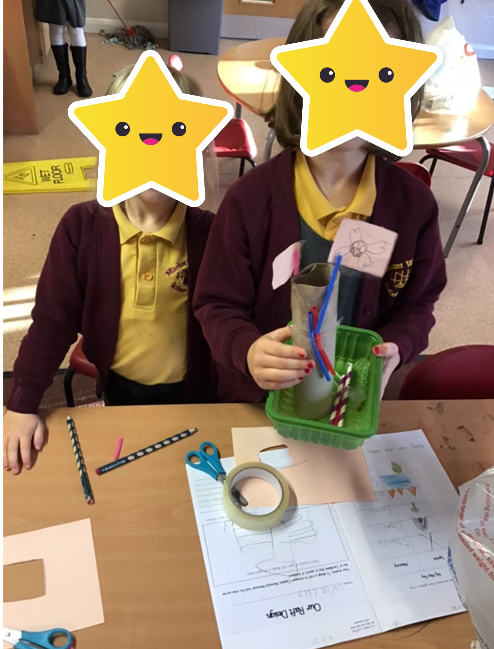
Design is used as a stimulus for the teaching of other subjects, such as history, art, science and geography. Children use their skills to make links to other subjects. For example, in Year 1 children use their knowledge of structures to build rafts to support their learning about pirates. By developing strong cross-curricular links, teachers are able to develop children’s vocabulary even further.
Progression in design and technology
As children move through the school, teachers choose relevant topics and plan their activities carefully so that children’s learning is progressive. In design and technology, we have taken key elements of the National Curriculum and organised them into a set of hierarchical statements. This makes expectations of progression very clear to teachers when planning lessons. These are:
Progression in design
Progression in making
Progression in evaluating
Progression in food and technology
|
|
DT Curriculum Progression | [pdf 181KB] |
|
Foundation stage
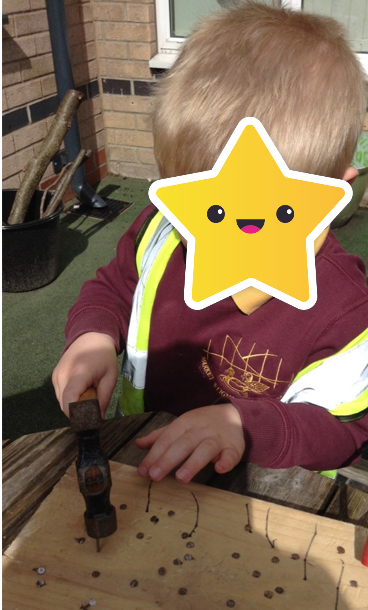
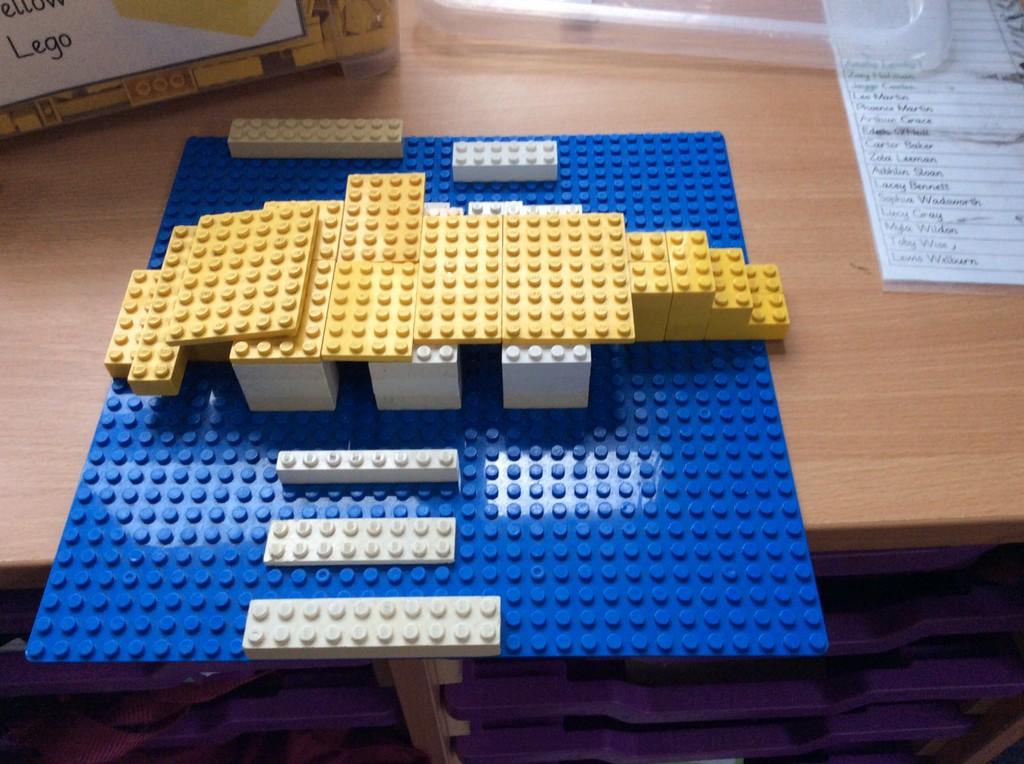
Children in the early years develop a secure foundation for design and technology in preparation for Key Stage 1. Design and technology is taught within the Physical Development, Understanding The World and Expressive Arts and Design areas of the Early Years Foundation Stage Curriculum. Continuous provision is available where children develop and practise skills independently. Children use a range of materials and are taught basic techniques such as joining, folding and using simple tools. Continuous provision areas include the outdoor area, the construction area, the maths area and finger gym activities. Children begin by creating their own open-ended products that support their imaginative play. As they progress, children have the opportunity to design and make junk modelling using recyclable materials. They practise cutting skills and sewing. Topics are children led, following their interests and design and technology is incorporated into the topic. For example, children make junk modelling vehicles following an interest in transport.
Key Stage One
Children in key stage one follow the National Curriculum. Most of the learning takes place through topics but some design and technology is specifically taught to ensure full curriculum coverage. Children have access to an increasing range of materials and tools. In Year 1 children make vegetable soup looking at where vegetables come from and how to prepare food safely and hygienically. They then design and make a waterproof raft as part of their topic on pirates.
Children in year two use the text “Iggy Peck Architect” by Andrea Beaty to inspire their love of buildings and to develop their understanding of different types of structures. They build on their knowledge gained in year 1 to design, make and evaluate their own structures. They then transfer their knowledge and skills and apply it to den building.
All children have access to design and technology. Pupils, and particularly disadvantaged pupils and pupils with special educational needs and/or disabilities (SEND) are supported and work is matched to the needs of the child. Teachers’ careful consideration of how to adapt activities ensures that pupils with special educational needs and/or disabilities (SEND) access fully the design and technology curriculum.

Helping children to remember their learning and make links
We want our children to be able to remember what they have been taught and be able to make some basic links with their subsequent learning. With this in mind, teachers carefully plan design and technology lessons using a range of high-quality strategies:
- Activities that specifically emotionally and intellectually engage our children are planned and delivered for the learning to go deep. For example, our nursery children made bread when learning the story of The Little Red Hen.
- Activities that are practical and enable children to apply their knowledge and understanding. For example, Year 2 children used their knowledge of lessons learned whilst reading Iggy Peck Architect for den building.
- Children are challenged to think and to care so that they can express their personal opinions about their designs and products.
- For children who find learning more challenging, teachers use a whole range of strategies to help engage them in design and technology. This is personalised according to the individual needs of the child. When children fall behind, they are quickly brought up to speed by well-trained teaching assistants or timely intervention from their teachers.
Staff Training
Wherever possible, our teachers are engaged in discussion of what constitutes high quality teaching and learning in design and technology. Time is provided for staff to work together on planning and curriculum development. The profile of design and technology is kept high in the school through a rolling programme of topics, inspiring books and interesting displays that show the high quality of the children’s work.
Impact: how is design and technology enriching the learning of our children?
All children have access to design and technology. The curriculum is ambitious and matches the breadth of the National Curriculum. Pupils’ achievement in D&T is good because there is a well-planned range of purposeful activities supporting their early development of practical skills. Children enjoy designing and making products, solving problems and seeing their ideas taking shape. Good quality teaching encourages pupils to be innovative and creative, and enables them to draw effectively upon their technological understanding and skills to produce ideas and make their designs.Conversations with children show that they are interested in the way design and technology impacts our lives.
Health and safety is taught well and staff are vigilant. Children demonstrate good attitudes in following health, safety and hygiene rules.
Pupils with special educational needs and/or learning disabilities and lower-attaining students made good progress as a result of the good individual support they receive.
Our next steps
- Continue to develop topics to ensure progression and enable children to make links and connections in their learning.
- Continue to develop the use of outdoor learning opportunities in our topic work.
- Continue to develop “knowledge organisers” for design and technology topics. This is a go-to document which identifies the key information that children need to have learned by the end of a topic. It also acts as a tool to support parents in understanding coverage and helps children in retaining and retrieving knowledge for life-long learning. Each one starts with knowledge children should already know from previous learning and what the links are with future learning.