History
“A people without the knowledge of their past history, origin and culture is like a tree without roots.”
Marcus Garvey
This area of our curriculum is led by Miss Vickers. Her role is to provide the professional leadership and management for history to secure high-quality teaching, effective use of resources and improved standards of learning and achievement for all pupils. Miss Vickers has been leading this area of the curriculum since September 2023. She says:
“Our history curriculum genuinely excites our children’s imagination and helps lay the foundation for later study. Our younger children begin by understanding more about their own personal history and come to realise that a world existed before they and others around them were born. Teachers carefully shape children’s learning so that they develop an awareness of the differences and similarities between the past and the present. Our older children begin to handle wider periods of time and are introduced to some abstract terms such as monarchy and some key historical concepts such as cause and consequence . They start to realise that we can find out about the past through different sources, such as newspaper reports, photographs and diaries. Children’s motivation in history is high".
The key elements of the National Curriculum's programme of study for history have been organised into a set of hierarchical statements to ensure that children accumulate more and more historical knowledge as they progress from our Nursery or Reception through to the end of Year 2. Teachers are aware that planning must always have an eye on longer-term learning and the part that historical knowledge building plays in this.

|
Progression in HISTORY | [pdf 220KB] |

|
|
|
National Curriculum - History key stages 1 to 2 | [pdf 105KB] |
|
Children learn to make deductions about the past by using the local William Bradley statue in Market Weighton. They know we can find out about a person’s past life by using a range of artefacts. Here they are comparing their own height with that of William Bradley.

Intent: what do we want children to know about history by the time they leave our school?
We believe that helping children to take their first steps into the fascinating world of history can help our children to achieve our school’s core purpose:
To help children to do today what they will be able to do independently tomorrow by becoming confident, successful life-long learners and responsible citizens.
How does history contribute to this? To us, history is more than a series of interesting but uncontested stories about the past. Teachers are aware that history is not just about acquiring facts, it is about using information to answer a question or solve a problem. It is about seeing the relevance of it in their own lives. For our very youngest children, it is about them developing an understanding of who they are and where they have come from. For our oldest children, it is about developing some basic skills that will prepare them to know what to do when faced in their own lives with two versions of the same event or two incompatible interpretations of a famous person. This will help them to become the successful learners and responsible citizens of tomorrow. This grounding in the study of history will give them a firm foundation for their learning at Key Stage 2 and beyond.
Aspiration: we want our children to develop a curiosity about the past and provide them with the aspiration to go on to learn more about history in their future schooling.
Independence: children build up their historical knowledge over time to help them to develop independence in identifying and using historical sources of information, (eg. photographs, artwork, diaries and artefacts).They learn appropriate vocabulary that will help them to explore historical sources.
Motivation: we aim to develop children’s motivation and to capture children’s interest in history so that they develop an awareness and an interest the past. They will be able to describe historical events that have happened around them including themselves, our own school and local area.
Aims of teaching history
- to foster an interest in the past, and to develop an understanding that enables them to enjoy history
- to know about some historical events and individuals in British history and the wider world and begin to recognise their impact
- to begin to develop a sense of chronology and understand that changes happen over time
- to begin to understand some key historical concepts, such as change, cause and consequence, similarity and difference
- to begin to use some methods of historical enquiry to find out about the past
- to gain some simple, local perspective on history
Links with British values and PSHE (Personal, Social & Health Education)
Our history curriculum offers an excellent context for developing many of the worthwhile skills and understanding that are intrinsic British values and form part of the PSHE curriculum. It provides opportunities to for our children to begin to:
1. Practise critical thinking skills
2. Understand democracy
3. Be active and participative
4. Become sensitive to, and tolerant of, diversity and be concerned with social justice
5. Develop a sense of their own and others’ identity and appreciate their membership within communities
6. Develop their ethical and personal values
7. Consider significance of issues, actions and interventions, or failure to act
8. Make connections between cause and consequence
Implementation: how is history being delivered?
We plan for progression across the year groups from our Nursery class upwards so that our children become more familiar and confident in their ability to "do history" and to start to see themselves as mini historians. Our history content is therefore carefully chosen and teachers have an eye on longer term learning so that children's knowledge is built up over time. Children's learning is predominantly structured around three history enquiries in each year group that link to Development Matters statements in the Early Years Foundation Stage (Nursery and Reception) and to the National Curriculum in Key Stage 1 (Years 1 & 2). Woven within our curriculum are our "golden threads" which are specifically chosen historical concepts which the children revisit throughout the Early Years and Key Stage 1. We have chosen (1) the key historical abstract term of "monarchy" because this is something that is relatable to the children's experiences today and (2) the key historical concepts of chronology, cause and consequence and similarity and difference. Children are introduced to simple timelines in the Early Years and Year 1 and start to be able to chronologically order the events they have studied by the time they reach Year 2.
In this photograph, children in Reception recall and order recent events by re-reading their special “floor book” which captures key moments of their learning since starting school in September.
Choice of content
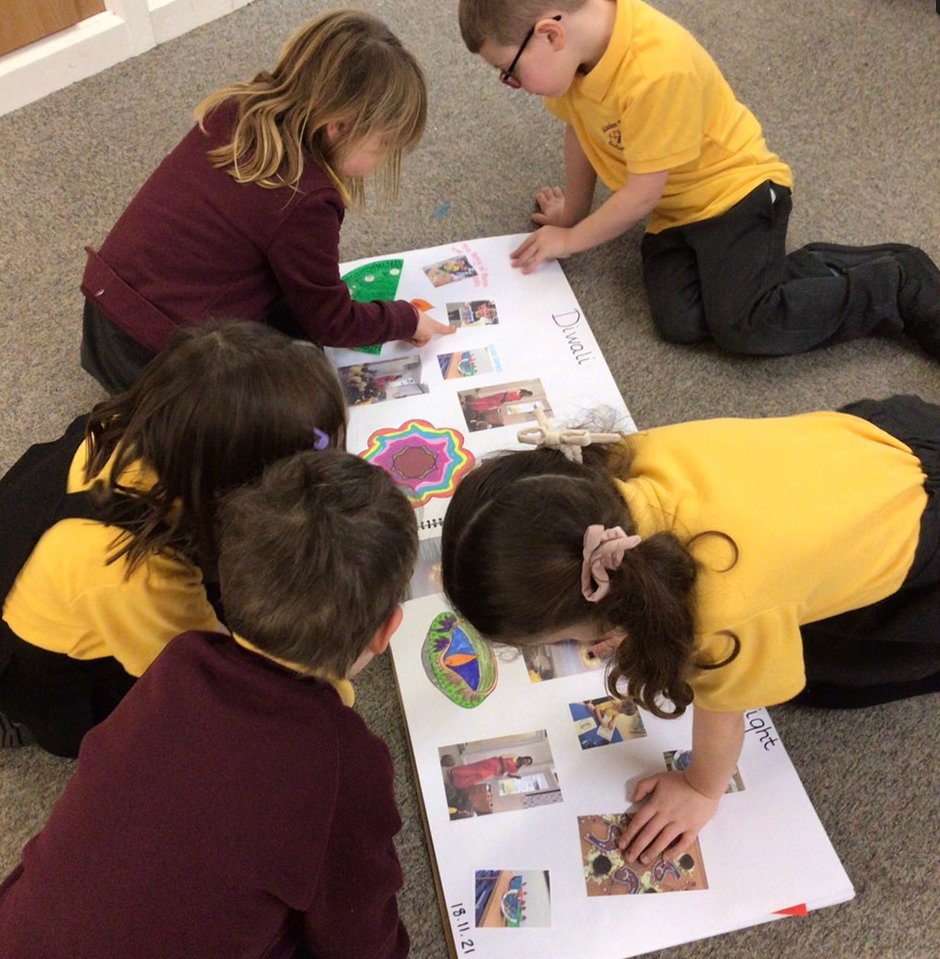
We choose topics that children can relate to, starting off in the early years with the children themselves as growing individuals with their own life history, moving on to content that children can relate to through their own experience (for example, how toys have changed over time), until we reach a point that we can talk about significant past events and how they have shaped our history.
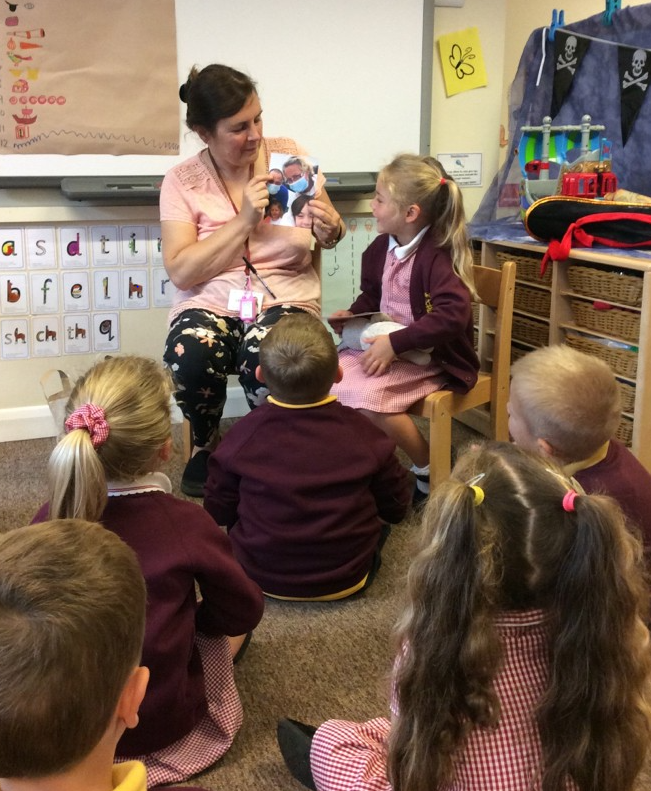
Early Years
We use the children’s own lives to demonstrate change and passage of time through exploring seasons, birthdays and specific local, national and international festivals or celebrations.
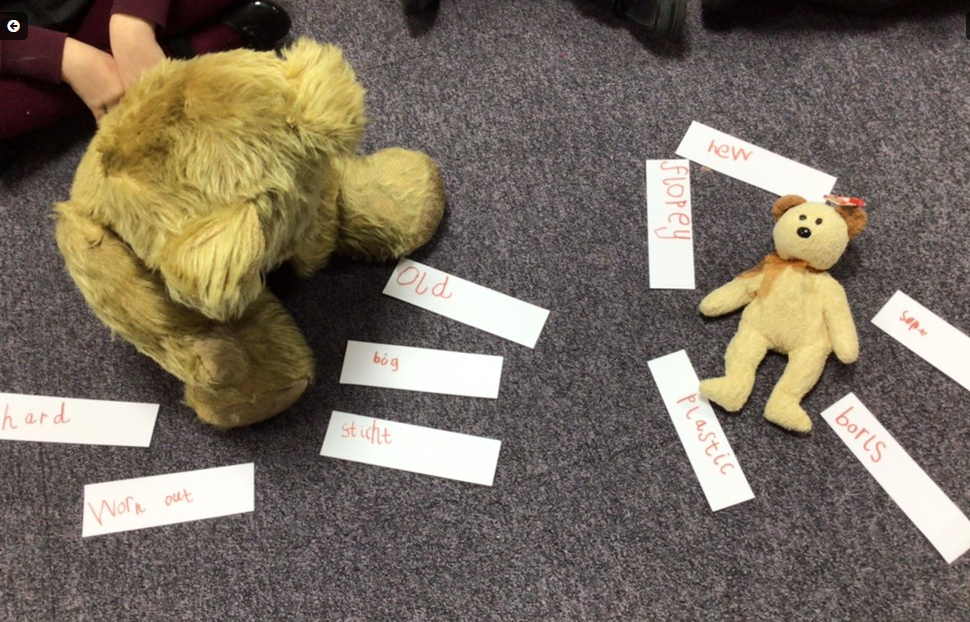
Year 1
Children are introduced to key historical conepts through topics that are familiar to them, such as changes to toys over time. They also explore the past of their own town when they use local historical sources to find out about William Bradley's past.
Year 2
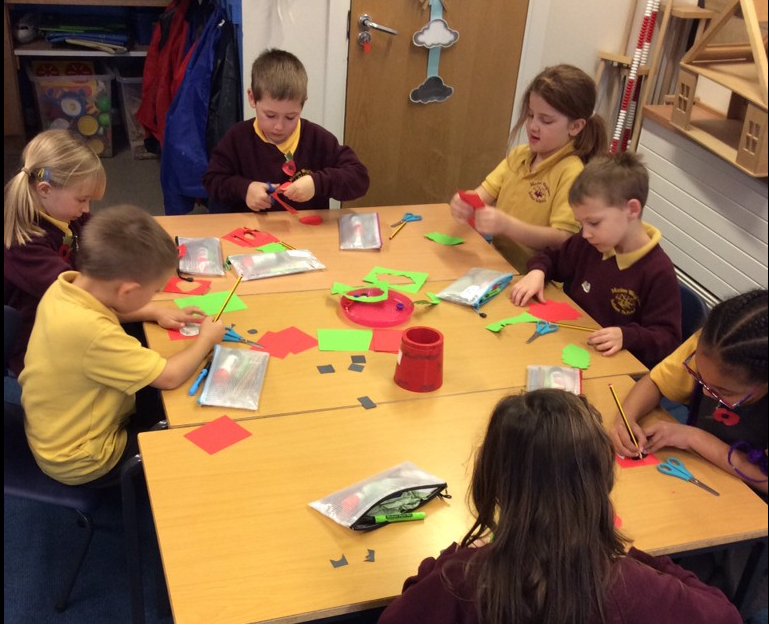
Children begin to delve deeper into the significant events of Britain's past when they learn about why we wear poppies in November. They are also introduced to key historical figures and events in Britain's past such as Samual Pepys and the Great Fire of London and how it changed the face of London.
Helping children to remember their learning and make links
We want our children to be able to remember what they have been taught and be able to make some basic links with their subsequent learning. With this in mind, teachers carefully plan their history lessons using a range of high quality strategies:
- Retrieval practice is at the heart of each lesson and provides the opportunity to recall previously taught knowledge. Through enabling knowledge to stick, this allows children to build secure historical understanding.
- Activities that specifically emotionally and intellectually engage our children are planned and delivered for the learning to go deep. For example, talking about the toys they like playing with today and contrasting them with toys from the past.
- Activities that are practical and enable children to apply their knowledge and understanding. For example, setting fire to a row of "buildings" to see how the Great Fire of London spread.
- Children are challenged to think and to care so that they can express their personal opinions about events in the past.
For children who find learning more challenging, teachers use a whole range of strategies to help engage them in history. This is personalised according to the individual needs of the child. When children fall behind in history, they are quickly brought up to speed by well-trained teaching assistants or timely intervention from their teachers.
Staff training
Wherever possible, our teachers are engaged in discussion of what constitutes high quality teaching and learning in history. These discussions are set within a practical context of real work children will be engaged in so that principles emerge from practice and can then be applied to other contexts. Time is provided for staff to work together on planning and curriculum development. The profile of history is kept high in the school through our detailed planning, resources and interesting displays that show the high quality of the children’s work.
Impact: how is history enriching the learning of our children?
Children in Key Stage 1 are well prepared to start learning history because of the how well children in the early years develop their understanding of the world. Teachers make sure that children develop their understanding of change over time through activities such as comparing photographs of themselves as babies and children; they explore the different things they can do now that they could not do as babies, such as walking and talking; and through making sure that children regularly use time-based vocabulary, such as ‘yesterday’ and ‘last week’, accurately. Children are also included in whole-school celebrations which link to history events.
Teachers have thought carefully about why pupils should study these areas of history and what they will know and understand by the end of key stage 1. There are a wide range of interesting activities that encourage pupils to explore past events and extend their understanding of historical concepts such as cause and effect. In the early years, children begin to learn about the past by thinking about their own past and in Year 1 they learn about the past of their parents and grandparents. This helps children to develop their understanding of what has gone before and how it was different to the present. Older pupils extend their thinking by producing extended narratives of the events they have learned about. Teachers help children to use timelines and storyboards to understand the sequence of events within a topic. Pupils’ understanding of chronology is well developed by the end of Year 2 so that they know where and when the events they have learned about happened.
Teachers typically sequence activities appropriately and plan tasks that help pupils to build on what they already know. Homework is designed to encourage children to find out about history by introducing them to the topics they are going to study. For example, Year 1 children were asked to find out about what toys their parents and grandparents played with when they were young. This gives pupils a solid foundation on which to build their learning when they start their “Toys” topic in school.
Children are developing an understanding of how we learn about history. For example, they are starting to understand that we can use diaries and pictures that are from the time they are learning about, although these might not always be completely trustworthy. Similarly, children have an age-appropriate understanding of chronology, and can make comparisons between life in the past and how we live now. They are starting to compare features of different historical periods. For example, they made comparisons of the fire service in the 17th century and the fire service now.
A key concept developed throughout much of our history teaching is that of "monarchy". Children are introduced to the idea that monarchy exists and that our country has had a history of different kings and queens. They begin to understand the role that kings and queens have played in our past in relation to the topics covered.
Teachers explain lesson content clearly. This helps pupils, and particularly disadvantaged pupils and pupils with special educational needs and/or disabilities (SEND), to improve their use of historical vocabulary and remember more over time. Teachers’ careful consideration of how to adapt activities ensures that pupils with special educational needs and/or disabilities (SEND) access fully the history curriculum. Children are enthused by the strong subject knowledge of teachers and the way they explain subject content in age-appropriate ways.
Teachers assess pupils’ understanding of key historical concepts in history, including change and continuity, well. They check their knowledge of history through questioning pupils during lessons and through checking that historical content is accurate when referred to in their writing.
Consequently, pupils are very keen to know more about the past and are increasingly well prepared to develop their understanding in Key Stage 2. Pupils take their enthusiasm for history into their further studies at Mount Pleasant Junior School. This includes ancient civilisations and famous explorers in Year 3.
Teachers appreciate being able to work together in teams to plan topics and activities. They feel a sense of responsibility to make sure that pupils get the best possible provision and, typically, have strong knowledge of the topics they teach.