Music
“Life without music would be a mistake.”
Friedrich Nietzsche
This area of the curriculum is led by Mrs Kay-Wood. Her role is to provide the professional leadership and management for music to secure high quality teaching, effective use of resources and improved standards of learning and achievement for all pupils. Mrs Kay-Wood has been leading this area of the curriculum since September 2023. She says:
“Music at our school is exciting and lively, and is an integral part of school life. The teaching of music inspires children to develop a love of music and their talent as musicians, and so increases their self-confidence, creativity and sense of achievement. Music is a powerful, unique form of communication that can change the way children feel, think and act. Opportunities to experience and play music promotes team working, concentration and problem- solving skills. It develops identity and improves social cohesions within the school and wider community. Our music lessons at Market Weighton Infant School are fun and inspiring, engaging the children with songs, lyrics and movement. Visitors to our school may well hear singing or music coming from any classroom at any time, as we like to use music to support all our areas of learning. Children can often be heard singing snippets of songs they are learning. My aim is that children will leave us with a wide range of happy and rich memories in music, and a foundation upon which to build a lifetime of musical enjoyment and experiences.”
The key elements of the National Curriculum's programme of study for music have been organised into a set of hierarchical statements to ensure that children accumulate more and more musical knowledge as they progress from our Nursery or Reception through to the end of Year 2. Teachers are aware that planning must always have an eye on longer-term learning and the part that musical knowledge building plays in this.

|
Progression in music | [pdf 153KB] |

|
|
|
National Curriculum - Music key stages 1 to 2 | [pdf 86KB] |
|
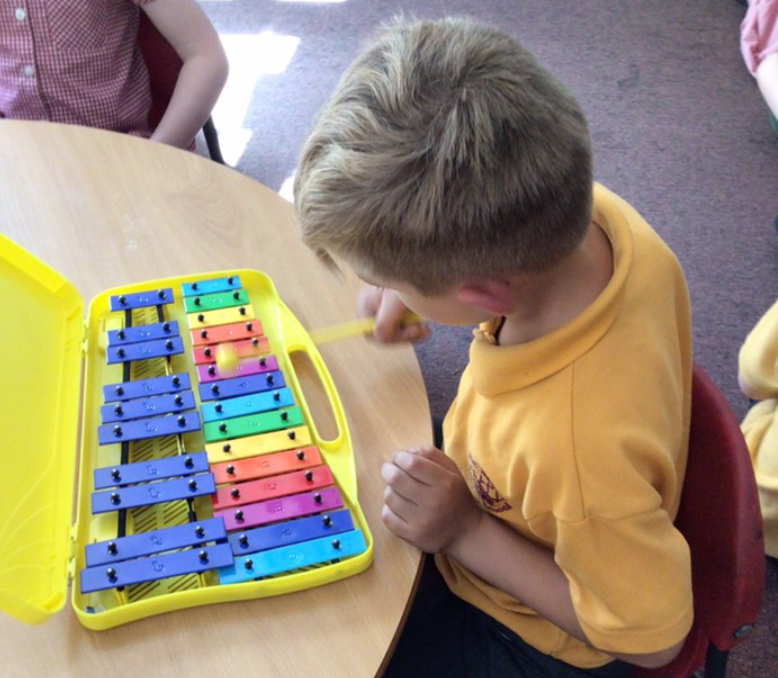
Children are taught to play a tuned instrument- the glockenspiel.
Intent: what do we want children to know about music by the time they leave our school?
Aims of teaching music
We believe that helping children to take their first steps into the magical world of music can help our children to achieve our school’s core purpose:
To help children to do today what they will be able to do independently tomorrow by becoming confident, successful life-long learners and responsible citizens.
How does music contribute to this? For us, music is a way to ignite all areas of child development and skills that our children will need to become successful life-long learners, including intellectual, social-emotional, motor, language, and overall literacy. It helps the body and the mind work together. Exposing children to music during early development helps them learn the sounds and meanings of words. Dancing to music helps children build motor skills while allowing them to practice self-expression. Music helps strengthen memory skills too.
In addition to the developmental benefits, simply put: music bring us joy. Just think about listening to a good song in the car with the window down on a beautiful day. That's joy.
Aspiration: we want our children to develop a love of music that will inspire them to continue to enjoy different aspects of music throughout their years of schooling and into the wider world. We hope that the experiences we provide will inspire our children to play musical instruments and participate in productions, drama groups throughout their school years and beyond.
Independence: children are taught a range of skills over time to help them to develop independence and confidence in singing; playing a range of tuned and untuned instruments and appreciating a growing range of different styles of music. They learn appropriate vocabulary that will help them to develop their musical skills and knowledge.
Motivation: we aim to develop children’s motivation and to capture children’s interest in music so that they develop into confident musicians who enjoy performing to others and can appreciate music in its different forms. To achieve this, we deliver our music curriculum in a fun, exciting way which engages all children, especially children with SEND. We ensure our music is inclusive for all level and abilities, and brings out the very best in each child. We want our children to develop their self-confidence and self esteem, and feel motivated to share with each other, their parents and the wider community.
Choice of content
Our music curriculum is shaped in the way it is for a variety of reasons:
- We want our children to feel a sense of achievement when performing together, within a small group or part of their wider community
- We want our children to achieve a sense of well-being and peace as they continue to make judgements about the music they choose to listen to and enjoy.
- We want our children to see music as an alternative form of communication, reaching out to others and sharing a sense of belonging.
We follow the programmes of study for music in National Curriculum (2013) which provides an outline of core knowledge around which teachers can develop exciting and stimulating lessons to promote the development of pupils' knowledge, understanding and skills as part of the wider school curriculum.
- Perform: to use their voices expressively and creatively by singing songs, speaking chants and rhymes, to play tuned and un-tuned instruments musically
- Compose: to experiment with, create, select and combine sounds
- Appreciate: to begin to make judgements about the quality of music by listening with concentration and understanding to a range of high quality live and recorded music

Links with British values and PSHE (Personal, Social & Health Education)
Our music curriculum offers an excellent context for developing many of the worthwhile skills and understanding that are intrinsic British values and form part of the PSHE curriculum. It provides opportunities to for our children to begin to:
- sing songs which reflect ways of living together, empathy and understanding of other people and the world around us.
- establish a clear set of rules when listening, performing and composing: working together as a team, taking turns with the instruments, listening when someone is playing and deciding on whose ideas are going to be used in a composition.
- make choices about the music they like to listen to or choose to perform and are respected for their individual preferences
- appreciate the fact that music from all cultures and traditions around the world develops and contributes positively to British music. Children are taught songs that reflect our strong heritage in Britain as well as those from around the world.
Progression in music
We recognise the importance of using the child’s voice as their “first instrument” and we are guided by the national Curriculum for Music as well as the more recently published Model Music Curriculum (March 2021) which states that:
“Singing is at the heart of Key Stage 1, with songs and chants underpinning all areas of study. Repetition of techniques is vital to consolidate and gain confidence.”
We use a scheme called “Charanga” to ensure progression in musical skills. Through a series of weekly, interactive lessons, children engage their inner hearing which is the ability to hear musical sounds inwardly- like the ability to do mental arithmetic or read a book silently. The children listen and respond to different styles of music and begin to embedd the foundations of the interrelated dimensions of music. Appropriate vocabulary is introduced as the children progress up the school, enabling them to discuss pitch, duration, dynamics, tempo, timbre and structure of musical compositions in language suitable for each year group. Subsequent year groups build upon the vocabulary used. Our youngest children learn to sing or sing along with nursery rhymes and action songs whilst our oldest children in Year 2 learn more complex songs as well as other ways of using the voice, such as rapping (spoken word). Children learn to play a range of percussion instruments and progress to playing tuned instruments as they develop more musicality, including glockenspiels, xlyophones and the recorder.
|
|
Progression in music at Market Weighton Infant School | [pdf 151KB] |
|
|
|
Charanga Overview (Foundation 2) | [pdf 166KB] |
|
|
|
Charanga Overview (Year 1) | [pdf 89KB] |
|
|
|
Charanga Overview (Year 2) | [pdf 109KB] |
|
Implementation: how is music being delivered?
We make sure that music is taught discretely each week through its own timetabled lesson and we also use music to help explore a particular topic in more depth. This helps ensure that the breadth of music coverage matches the aims of the National Curriculum for Music.
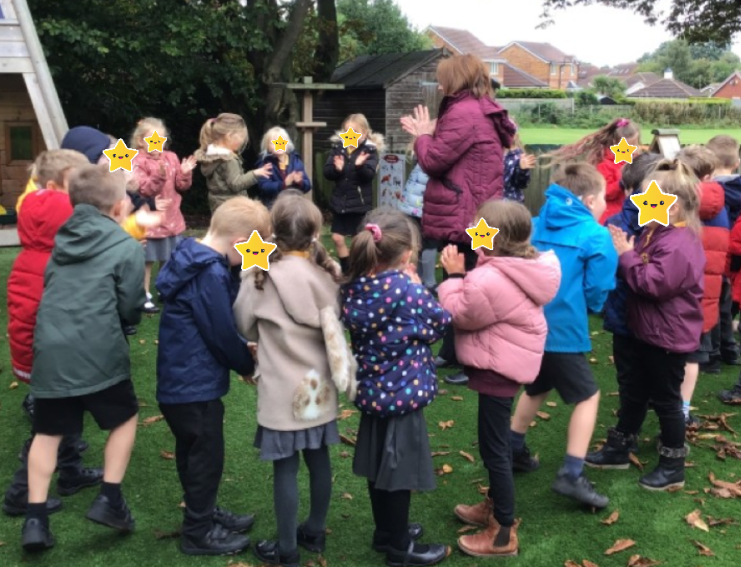
We love singing at Market Weighton Infant School and it is at the heart of what we do. At the end of every half term, all children and staff in school come together for a fun “Big Sing” to reinforce the importance we put on singing in our school. This promotes a sense of well-being, fun, togetherness and belonging in our school. The children are motivated to share the songs they have been learning with everyone. At Christmas, our oldest children enjoy entertaining the residents at local residential homes and care homes, with their singing and instrument playing, and they realise how appreciative their audience is and the impact their performances make. Carol singing at Tesco’s is another highlight of the year.
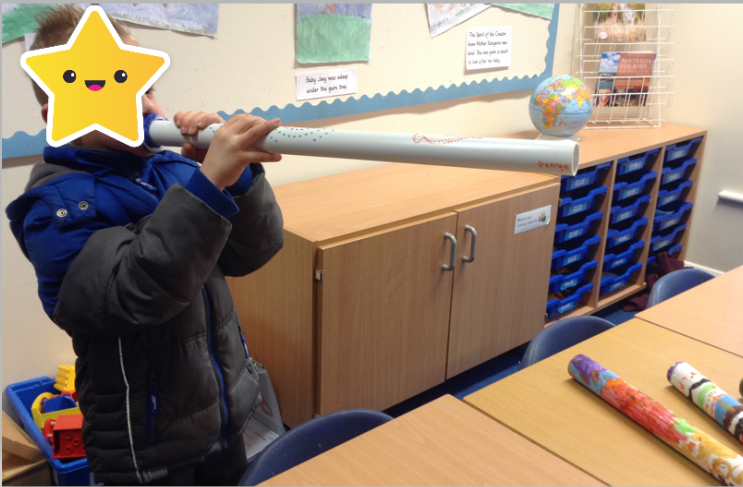
During our Arts Week, we celebrate music from different cultures and countries. For example, we have listened to Australian aboriginal music, Spanish flamenco music, Gene Kelly’s “New York, New York,” and Holst’s The Planets. We provide opportunities for the children to experience learning beyond the classroom by inviting professional musicians to work in school with the children. In our Australia and Spanish weeks, local community singer Sam Dunkley (‘Performing Arts etc’) came to lead the whole school in exciting new songs. We had a visit from ‘the didgeridoo man’ who made didgeridoos with the Year 2 children and a flamenco dancer ran workshops in flamenco style music and dance for all Key Stage 1. In USA week, all our children participated in of American style dance and music (Lindy Hop, Jive, Charleston, Line Dancing, Street dance) led by Market Weighton dance teacher, Miss Emma. We also invite local musicians to play, such as the Schools’ Music Orchestra at Christmas time.
A Y2 pupil plays his own didgeridoo.
We include singing in school assemblies. Some songs are traditional favourites and others are newly taught. We select songs which reflect British values, ways of living together, empathy and understanding of other people and the world around us. Direct links are made with Bible stories and Christian messages. Children celebrate their the harvest festival with songs, prayers and readings. Foundation children are taught the Christmas nativity story through references to the songs they have learnt for their Christmas play.
From the early beginnings in the Foundation Stage where children learn to handle and explore musical instruments, our Year 2 children learn to play recorders and tuned percussion instruments.
We are aware of the excellent cross curricular opportunities music in our school provides. In addition to reinforcing our learning in maths, English, science and the foundation subjects, we use our listening skills for musical appreciation in dance lessons, drama and art work. We use music to encourage calmness and well being in our PSHE lessons, encouraging the children to think about the feelings and emotions that carefully selected pieces of music may provoke. We invite theatre groups into school where children enthusiastically engage in singing, dance and acting with a professional cast. We hope such experiences aspire our children to participate in productions, drama groups throughout their school years and beyond.
We are fully aware that music is an ideal tool for communication, and we provide plenty of opportunities for children with special educational needs or disabilities, or children who find learning more challenging. They have additional access to sound making equipment, instruments, listening centres, and music programmes on iPads. We have a state-of-the-art sensory room where these can be facilitated. Our music provision is fully inclusive, and all children are included in our singing, class music lessons and concerts and productions.
We use ICT whenever possible to support our learning. Each class has a listening centre, and musical creations can be recorded on class iPads. Our younger children use Tocca Tocca Band and 2Simple music on Purple Mash.


Here a Nursery pupil explores the tamborine...

...triangle....
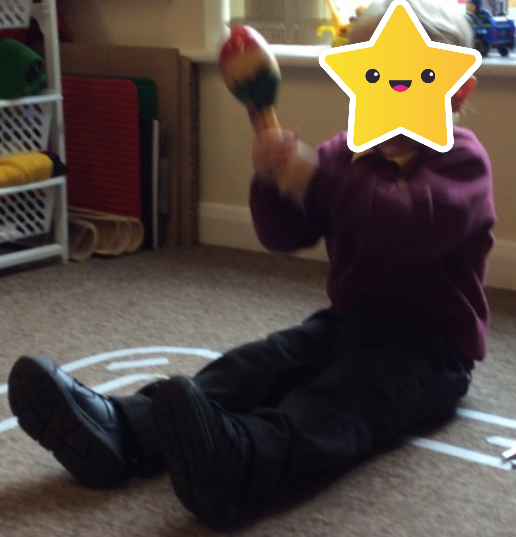
...and maracas. What a start!
The whole school enjoyed a live orchestral concert from the School's Music Service at Christmas.

Assessment and Monitoring
Teachers assess children’s work in music by making professional judgements as they observe and listen during music lessons and ongoing provision opportunities. These are recorded on our Tapestry system. Assessments are used to plan subsequent lessons, ensuring development and progression of skills.
The quality and effectiveness of the teaching of music in school is monitored by the Music Subject Leader through learning walks, observation of lessons and scrutiny of planning and assessment. The leader supports colleagues in the planning and delivery of lessons, and keeps all staff informed about current developments in music and relevant training.
Impact: how is music enriching the learning of our children?
“Music can change the world, because it can change people.”
Paul David Hewson
Music has a huge impact at Market Weighton Infants School! By engaging in musical activities, we create enthusiastic learners within all area of our curriculum. Our children develop increasing confidence and self-assurance. They are willing to tackle new ideas and have a go at new challenges. They are able to share their thoughts, listen to the ideas of others and practise teamwork and collaborative learning. They appreciate the enjoyment of doing things together.
We like to share our love of music and celebrate our musical achievements with our friends, parents, governors and the wider community in Market Weighton throughout the year. In October, children learn a harvest song to sing to the rest of the school. At Christmas, every child in the Foundation Stage participates in a Christmas production with singing, music, dressing up and drama. Y1 participate in an Easter Concert for their parents. Our school year always finishes with a Y2 Leaver’s Production, which is a celebration of how much the children have achieved since their first days in Foundation Stage. We feel immensely proud of the achievements of all our children, and each year our production demonstrates the power of music in raising confidence and self esteem. Every child in Year 2 has a part on the stage. Children volunteer to take lead acting parts, solo singing and duets, and astound us with their accomplished performances. Singing and music has given them their chance to shine, to demonstrate their capabilities and skills, to give them confidence and self belief, and to move on to the junior school with a sense of achievement and knowledge they can succeed.
Next steps
- Review which musical composers and different genres are being studied to ensure a cultural mix
- Develop the use of Charanga throughout the school to ensure progression of skills
- Develop more links with local musicians, including those from Mount Pleasant Junior School to perform to us