Science
"The important thing is never to stop questioning."
Albert Einstein
This area of the curriculum is led by Mrs Bull. Her role is to provide the professional leadership and management for science to secure high – quality teaching, effective use of resources and improved standards of learning and achievement for all pupils. Mrs Bull has been leading this area of the curriculum since 2021. She says.
“It is science that has led the way through the pandemic. It is the science experts that advise the government in what to do next. Daily we saw the passion and dedication that doctors and nurses have for their jobs. Engineers worked hard to develop ventilators in record time. Manufactures and some schools made face shields for doctors and nurses. The science researchers worked tirelessly to quickly develop a successful vaccine that led us to a way out of this difficult time of national history. We are fortunate to have some of the best scientist in the world in the UK and I hope that their work during this pandemic inspires children to develop a love for science. Science is a core subject alongside English and mathematics. We aim to keep science at the centre of our school curriculum.”
In our school, we aim to develop confident and enthusiastic young scientists who build a deep and secure understanding of science by building on small key steps in their learning. Our younger children are encouraged to ask questions about the world around them. They are guided by the teachers to help them to answer their questions and to discover more. In the Early Years Foundation Stage, the science is led by the children’s interests. In Key Stage 1, we continue to build on the children’s curiosity and help develop children’s thinking, questioning, observation and recording skills following a progressive programme of work. Teachers' encourage the children to look for patterns (for example. when sorting and classifying things). In Year 1, as part of ongoing provision activities we have a science STEM area which has activities for the children to complete independently. Children become experts, sharing knowledge with others (for example, when finding out about different animals and their habitats). They share their knowledge with the rest of the class. Wherever possible we try to do our science activities outside as this is a valuable resource. Children are encouraged to do research at home and they often bring in books about a class topic, such as animals.
The key elements of the National Curriculm's programme of study for science have been organised into a set of hierarchical statements to ensure that children accumulate more and more scientific knowledge as they progress from our Nursery or Reception through to the end of Year 2. Teachers are aware that planning must always have an eye on longer-term learning and the part that scientific knowledge building plays in this.

|
Progression in science | [pdf 226KB] |

|
|
|
Science programmes of study key stages 1 and 2 | [pdf 232KB] |
|

Primary Science Quality Mark
In June 2023, we were awarded the Primary Science Quality Mark (PSQM) to celebrate our commitment to excellence in science teaching and learning.
PSQM is a school improvement programme for primary science, which provides professional development for new and experienced subject leaders each year. PSQM enables confident, knowledgeable, reflective leadership which results in an improvement in the way in which science is planned and taught across the whole school.
The PSQM is led by the University of Hertfordshire in collaboration with the Primary Science Teaching Trust.
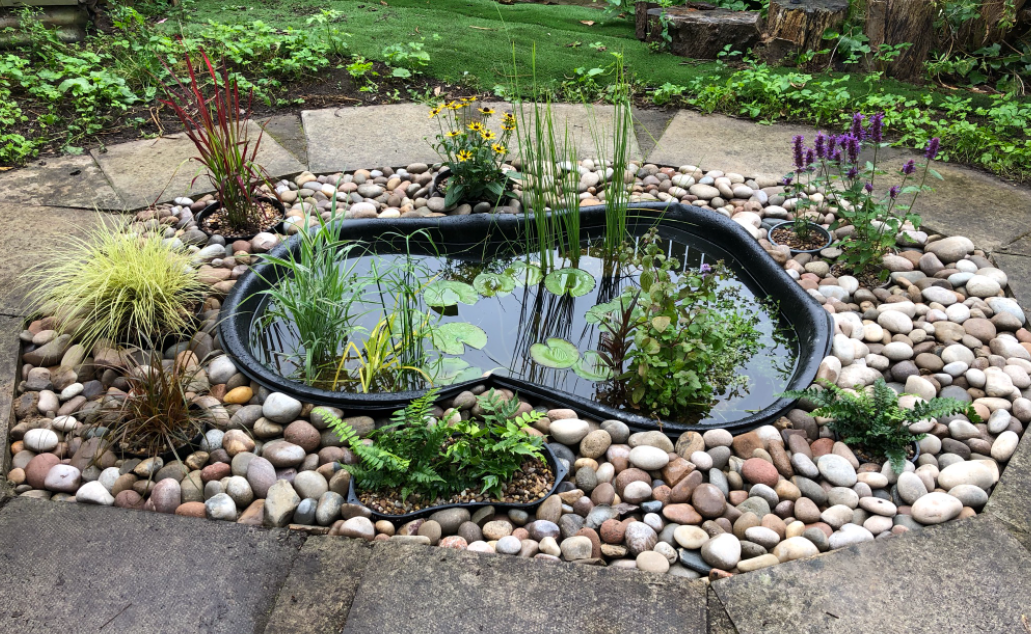
Children can use our wildlife area to investigate pond and plant life.
Intent: What do we want children to know about science by the time they leave our school?
Our Science Vision statement:
We want all children to be curious, inquisitive and articulate learners, using all their senses to explore the environment around them, to create a solid foundation for becoming scientists of the future.
We believe that helping children take their first steps into the fascinating world of science can help our children to achieve our schools core purpose:
To help children to do today what they will be able to do independently tomorrow by becoming confident, successful life-long learners and responsible citizens.
How does science contribute to this? Science is all about making sense of the world around us; it starts with a question. The sorts of questions children can ask are things like: Why is the sky blue? Why do the birds sing?
In the Foundation Stage, children are encouraged to ask questions and the teacher tries to help the child answer their question; this may be by providing them with the correct equipment so that they can find out more. For example, “Why do ladybird have spots?” The teacher could give the child a magnifying glass so that they can make closer observations of the ladybirds that they find; they could help them to find suitable information in books or suitable Internet sites so that they can learn more about them. As children are working on their question’s, other children become curious and may join in the investigation.
In Years 1 and 2, we continue to ask the children to think of questions and focus on particular topics. These are: materials, plants, animals, animals and their habitats and the seasons. The children develop their skills so that they can work scientifically. For example, they learn how to record their results from an experiment in a table.
Aspiration: we want our children to develop a curiosity about the world around them with the aspiration to learn more about science in their future schooling.
Independence: children are taught a range of skills over time to help them to develop independence, for example in identifying what equipment they need to carry out an experiment. They will learn how to research for information by asking ‘experts’, reading books and using the Internet. They will learn the appropriate scientific vocabulary needed to help them to articulately report information in a scientific way.
Motivation: we endeavour to motivate and to capture children’s interest in science so that they develop an inquisitive understanding of the world around them.
Aims of teaching science
- to experience and observe phenomena at first hand, looking closely at the natural and humanly constructed world around them
- to be curious and ask questions about what they notice
- to develop understanding of scientific ideas by using different types of scientific enquiry to answer their own questions, including observing changes over a period of time, noticing patterns, grouping and classifying things, carrying out simple comparative tests, and finding things out using secondary sources of information
- to use simple scientific language to talk about what they have found out
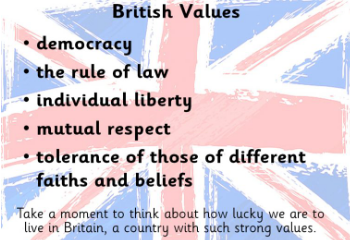
Links with British Values and PSHE (Personal, Social & Health Education)
Our science curriculum offers an excellent context for developing many of the worthwhile skills and understanding that are intrinsic British Values and form part of the PSHE curriculum. It provides opportunities for our children to begin to:
1. Practise critical thinking skills
2. Understand democracy
3. Be active and participative
4. Become sensitive to, and tolerant of, diversity and be concerned with social justice
5. Develop a sense of their own and others’ identity and appreciate their membership within communities
6. Develop their ethical and personal values
7. Consider significance of issues, actions and interventions, or failure to act
8. Make connections between cause and consequence

Implementation: how is science being delivered?
We make sure that science sits securely in our topic-based approach to teaching the curriculum. Several topics have a science focus. This ensures that the breath of science coverage matches the aims of the National Curriculum. We aim to teach science using cross curricular links right across the curriculum whenever it is suitable.
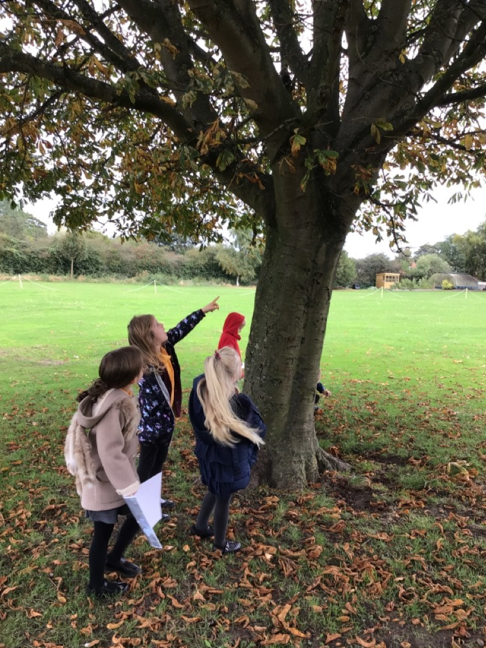
Our principal focus of science teaching is to enable pupils to experience and observe phenomena, looking more closely at the natural and humanly-constructed world around them. We often use our outdoors environment to do this, such as looking for signs of autumn. All year groups have science resources based outside in sheds. This ensures that the apparatus the children need to explore the world around them is readily available. For example, all year groups have gardening equipment.
We encourage children to be curious and ask questions about what they notice. We help them to develop their understanding of scientific ideas by using different types of scientific enquiry to answer their own questions, including observing changes over a period of time, noticing patterns, grouping and classifying things, carrying out simple comparative tests, and finding things out using secondary sources of information. We introduce simple scientific language to talk about what they have found out and communicate their ideas to a range of audiences in a variety of ways. Most of the learning about science is done through the use of first-hand practical experiences, but we also make use of appropriate secondary sources, such as books, photographs and videos.
‘Working scientifically’ is described separately in the programme of study, but is always taught through and clearly related to the teaching of substantive science content.
Children read and spell scientific vocabulary at a level consistent with their increasing word reading and spelling knowledge.
Links with other subjects
Science is part of our topic-based approach to teaching the curriculum.
- When using data in an experiment, the children are using and applying their maths understanding
- When writing about their findings, children are using and applying their English skills
- When singing a song about somethng like their bodies, children are developing music skills
- When drawing or painting what they find during a spring walk, children are practising their art skills
- Children develop their physical skills when recording information about their bodies such as the number of star jumps they can do in a minute
- When learning about important scientific events e.g. the moon landing, they are also learning about important historical figures in recent history, such as Neil Armstrong.
- When recording the weather in a diary, they are also developing their geographical skills
- Children learn to work as part of a team when completing investigations in groups

Helping the children remember their learning and make links
We want our children to be able to remember what they have been taught and to be able to make some basic links with their subsequent learning. With this in mind, teachers carefully plan their science lessons using a range of high-quality strategies:
- Activities that specifically emotionally and intellectually engage our children are planned and delivered for the learning to go deep. For example, when Year 2 children were learning about minibeasts they were also involved in an the end of the school year production about bees called “Honey.”
- Activities that are practical and enable children to apply their knowledge and understanding. For example, Foundation Stage children use their knowledge of lessons learnt about farm animals when they visited a farm. Children explore the tress in the school grounds when learning about the concept of evergreen and deciduous.
- Children memorise scientific facts and concepts through songs and rhymes.
- Activities use a lot of pictorial images to help children visualise their learning and remember it.
- Children are challenged to think and to care so that they can express their personal opinions about the world around them.
- For our children who find learning more challenging, teachers use a range of strategies to help them to engage with science. This is personalised according to the individual needs of the child. When the children fall behind in science, they are quickly brought up to speed by well-trained teaching assistants or timely intervention from the teachers.
Staff training
We use the National Stem Centre in York for staff training. They offer a wide selection of excellent science courses. We have staff meetings to discuss science.
Impact: how is science enriching the learning of our children?
The science curriculum is ambitious and matches the breath of the National Curriculum. Activities are engaging and well planned.
Teachers base their science on topics from the National Curriculum. We also aim to teach other exciting topics such as Space to inspire the children’s curiosity about the solar system, stars and worlds beyond. For example, in Year 1 the children learnt about the moon landing in 1969 and Neil Armstrong (as a person of historical interest). They had a visit from “Neil Armstrong” to answer their questions about the moon landing.
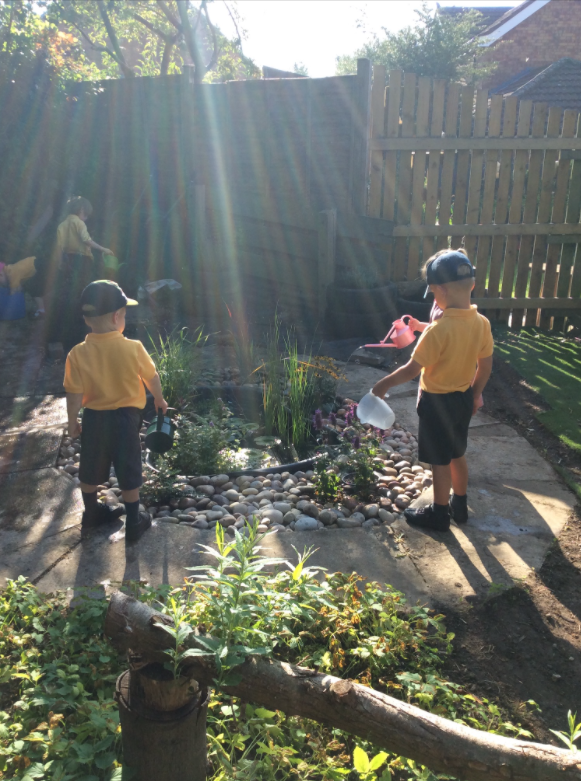
Children also learn about science outside of the classroom. Each year group has excellent access to a wildlife area and planters in their outdoor areas. As a result, children know how to grow plants, vegetables and care for wildlife. The children are knowledgeable about the local environment. Children go for regular walks around the school grounds to explore the changes during the seasons or look at the use of building materials and structures. As a result, children know tree and plant names as well as information about trees, such as whether they are evergreen or deciduous. Year 2 children have their seasonal walks around Market Weighton which are supported by Weighton Walkers, a local community group.
Children in Key Stage 1 are well prepared to continue their learning of science because of how well children in the early years develop their knowledge and understanding of the world around them. Teachers ensure that children understand scientific concepts and skills and continue to build their scientific knowledge by following a set of skills based hierarchical statements.
Homework
Homework is encouraged to embed the learning that has taken place and enables families to explore the world around them together. Tapestry, our online recording system enables us to capture the impact of this. For example, one parent explained:
"She was really interested by what she learnt in her science lesson yesterday about how bricks are made. She described how they were made by hand, using clay and a mould and how a piece of string chops them in half. She also said now they are made by machine, and travel on conveyor belts which move them along. She also said that the water has to be removed out of the clay otherwise the bricks just shatter. She listed the different colours they could be made in. She showed us how to make bricks from play dough, and then we made lots of bricks which we stacked, off-set, like a house. Her dad showed her that the doorway needed a lintel (we used a lolly stick), and made a carboard apex roof. We made a table and chairs and put a battery tea light inside the house to look like someone was inside having a fire."

Special Educational Needs & Disabilities
Teachers explain lesson content clearly and teaching assistants help the children to pre-learn some basic scientific vocabulary before the lesson is delivered. This helps pupils and particularly disadvantaged pupils and pupils with special educational needs and/or disabled (SEND) to improve their use of scientific vocabulary. Teachers’ careful consideration of how to adapt activities ensures that pupils with special needs and/or disabilities (SEND) access the science curriculum fully. For example, we have higher raised beds outside so that all children can access them easily. Children are enthused by the strong subject knowledge of teachers and teaching assistants by the way they explain subject content in age-appropriate ways. For example, in Year 1 SEND children pre-learnt the parts of a plant with the TA before the class lesson.
Assessment
Teachers assess pupils understanding of science through questioning pupils during the lesson. They check the scientific knowledge and understanding is accurate in their writing or recording. Significant moments of children’s knowledge and understanding is recorded on our electronic recording system, Tapestry. Videos and photos are often used to record children’s work e.g. when they are working scientifically. This acts as a record of each child’s science learning throughout the school.